Faulty implementation
Fail- Answer
- Refund in 14 days
- Source version
- v1
- Refresh performed
- No
Intelligence lab / Failure atlas
A valid source can still produce the wrong answer if a chatbot retains an old version. This experiment compares an unchanged cache with a version-aware refresh.
Fixture 2026-11-26-v1 · PIP research · no live vendor measurements.
Interactive · browser-only
Choose an example to compare two implementations, or change the inputs and run again.
Local only. Use non-identifying inputs, never customer data or credentials. Downloads stay on your device.
Illustrative example result · not measured vendor performance
The cached policy is stale; the repaired rule refreshes it.
Scroll the result table sideways on smaller screens if needed.
| Observable check | Faulty implementation | Repaired implementation |
|---|---|---|
| Answer | Refund in 14 days | Refund in 5 days |
| Source version | v1 | v2 |
| Refresh performed | No | Yes |
Download the current experiment report as JSON. The report includes inputs and limitations, not a certification.
Why this matters
The authorised policy changes after initial indexing. An old answer may look plausible because it really was correct earlier.
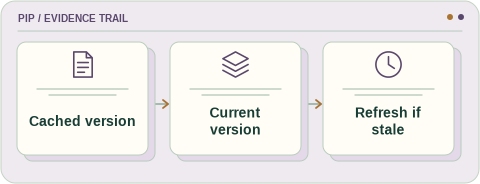
Conceptual fixture; test actual behaviour in the workbench.
Reproducible method
Illustrative methodology; test real configurations only with authorisation.
Make this useful in practice
For your bot, record the publication time, refresh time and first correctly grounded answer. This experiment does not measure indexing speed.
Evidence and boundaries
Examples and outcomes here are computed from explicit assumptions or user-supplied observations. Do not treat them as a certification, competitor measurement, real booking or guaranteed commercial result. No confidential records or third-party access are required.